Drilling digitalisation boosts consistent quality, productivity

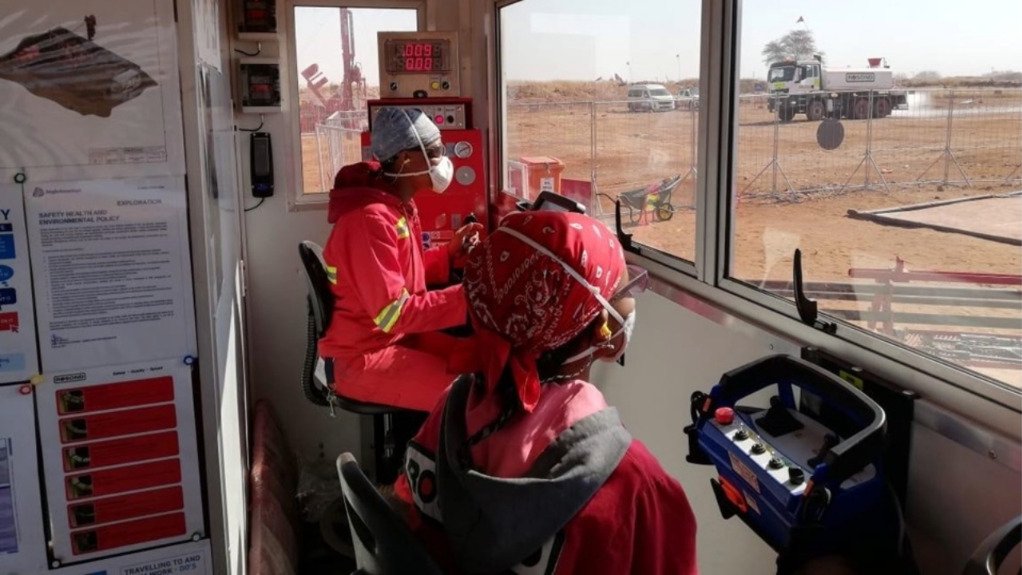

MACHINE DATA RELIANCE As modern drill rigs are operated from an air-conditioned command cabin, operators will often receive less of the traditional “sensory feedback” and will instead rely on machine data to optimise drilling
GLEN MCGAVIGAN As an industry, we are still some ways away from fully autonomous drilling, given the environments we operate in and the unpredictable nature of geology



Focusing on the controllable factors in the drilling process that deliver consistent quality and productivity enables drilling contractor Rosond to manage its operations at a more granular level through digitalisation and the application of process-control principles, says CEO Glen Mc Gavigan.
This approach also allows for significant productivity improvements in the company’s surface operations, which achieved a productivity increase of 19% in 2025, in comparison to the previous year, he adds.
“Connected rigs and connected people are the key to this transition. The more readily available the data, the faster we can respond, course-correct and keep the drilling process running with minimal interruptions.”
By applying a short-interval control approach, drilling performance is guaranteed to remain as productive and consistent as possible while helping to maintain stability in the drilling process, he adds.
Mc Gavigan says client engagement during drilling projects has become far more data-driven, collaborative and forward-looking. Rather than using retrospective reporting, Rosond aims to focus on using live dashboards, predictive insights and joint performance.
“As an industry, we are still some ways [away] from fully autonomous drilling, given the environments we operate in and the unpredictable nature of geology.”
A lot of the technology implemented by Rosond is operator-assist technology, which is designed to make drilling crew operations safer and more productive, he notes.
Data Collection
As a result of modern drill rigs being operated from an air-conditioned command cabin, operators will often receive less of the traditional “sensory feedback” and will instead rely on machine data to optimise drilling, says Mc Gavigan.
“This is where analytics become powerful. We define upper and lower control limits for key operating parameters [such as rotation speed and thrust pressure]. It gives the operator the ability to still apply their ‘art’ within the optimal limits the machine,” he states.
Rosond also uses equipment health monitoring to allow for the identification of problems before they become operational failures in the field. This ensures that any issues can be addressed through the planned maintenance windows rather than when unplanned breakdowns occur, consequently reducing downtime and increasing the availability of the drill rig.
Rosond thus works with smaller, early-stage issues rather than major component failures and early intervention can lower repair costs while reducing the risk of secondary damage, thus improving safety outcomes, he adds.
“Rosond collects . . . engine telemetry and drilling telemetry. From this data, anomalies in performance can be identified and flagged as early warning indicators for inspection or intervention.”
This allows for maintenance planning to become predictive based, rather than relying solely on fixed time or use intervals. Maintenance can be scheduled at the most effective time, often earlier than a failure would occur, thus preventing breakdowns and improving overall equipment availability, Mc Gavigan elaborates.
Implementing this predictive maintenance philosophy has enabled Rosond to increase planned maintenance activities by 30% to 40%, which has, in turn, delivered a 41% reduction in breakdowns, significantly improving overall fleet reliability, as well as safety incidents caused by machine failures.
“With the introduction of automation and digitisation, our workforce has adapted quickly because the benefits are tangible – the job becomes safer, more efficient and stable,” Mc Gavigan points out.
Article Enquiry
Email Article
Save Article
Feedback
To advertise email advertising@creamermedia.co.za or click here
Research Reports


Projects

Latest Multimedia

Latest News

Showroom
ISO-certified Condra manufactures overhead cranes, portal cranes, cantilever cranes and crane components: hoists, drives, end-carriages, brakes and...
VISIT SHOWROOM
For over 60 years, VEGA has provided industry-leading products for the measurement of level, density, weight and pressure. As the inventor of the...
VISIT SHOWROOM


Press Office
Announcements
What's On
Subscribe to improve your user experience...
Option 1 (equivalent of R125 a month):
Receive a weekly copy of Creamer Media's Engineering News & Mining Weekly magazine
(print copy for those in South Africa and e-magazine for those outside of South Africa)
Receive daily email newsletters
Access to full search results
Access archive of magazine back copies
Access to Projects in Progress
Access to ONE Research Report of your choice in PDF format
Option 2 (equivalent of R375 a month):
All benefits from Option 1
PLUS
Access to Creamer Media's Research Channel Africa for ALL Research Reports, in PDF format, on various industrial and mining sectors
including Electricity; Water; Energy Transition; Hydrogen; Roads, Rail and Ports; Coal; Gold; Platinum; Battery Metals; etc.
Already a subscriber?
Forgotten your password?
Receive weekly copy of Creamer Media's Engineering News & Mining Weekly magazine (print copy for those in South Africa and e-magazine for those outside of South Africa)
➕
Recieve daily email newsletters
➕
Access to full search results
➕
Access archive of magazine back copies
➕
Access to Projects in Progress
➕
Access to ONE Research Report of your choice in PDF format
RESEARCH CHANNEL AFRICA
R4500 (equivalent of R375 a month)
SUBSCRIBEAll benefits from Option 1
➕
Access to Creamer Media's Research Channel Africa for ALL Research Reports on various industrial and mining sectors, in PDF format, including on:
Electricity
➕
Water
➕
Energy Transition
➕
Hydrogen
➕
Roads, Rail and Ports
➕
Coal
➕
Gold
➕
Platinum
➕
Battery Metals
➕
etc.
Receive all benefits from Option 1 or Option 2 delivered to numerous people at your company
➕
Multiple User names and Passwords for simultaneous log-ins
➕
Intranet integration access to all in your organisation